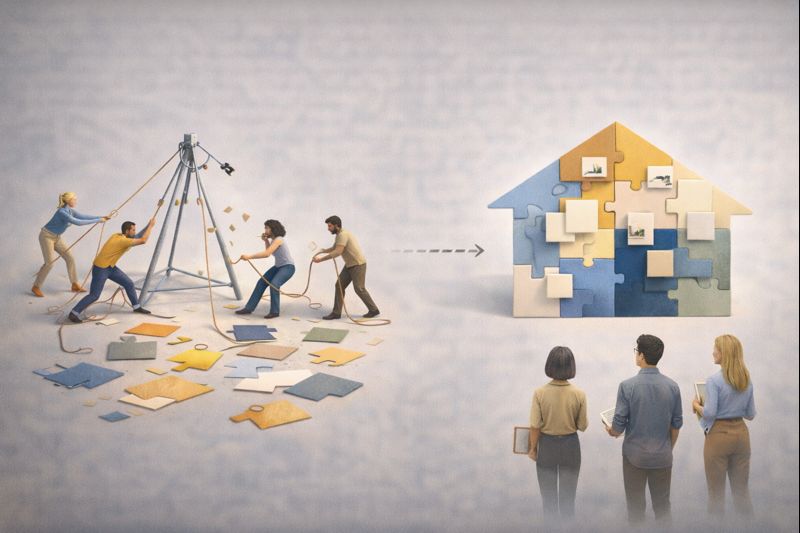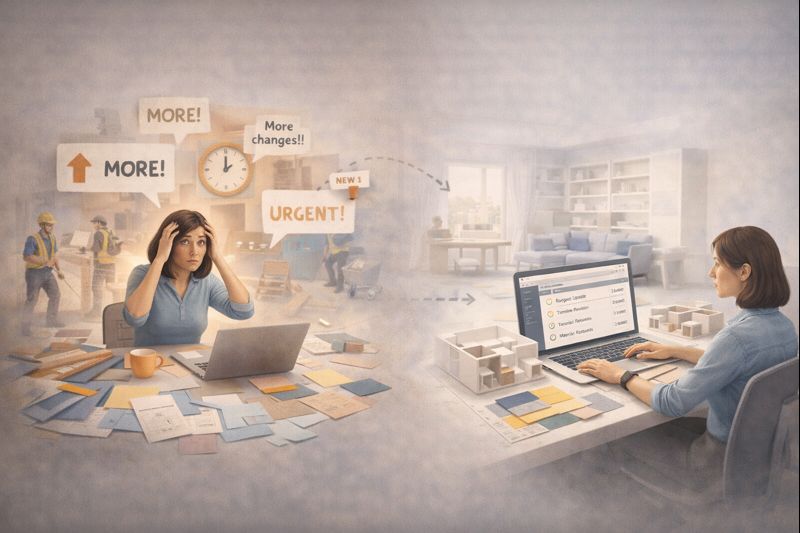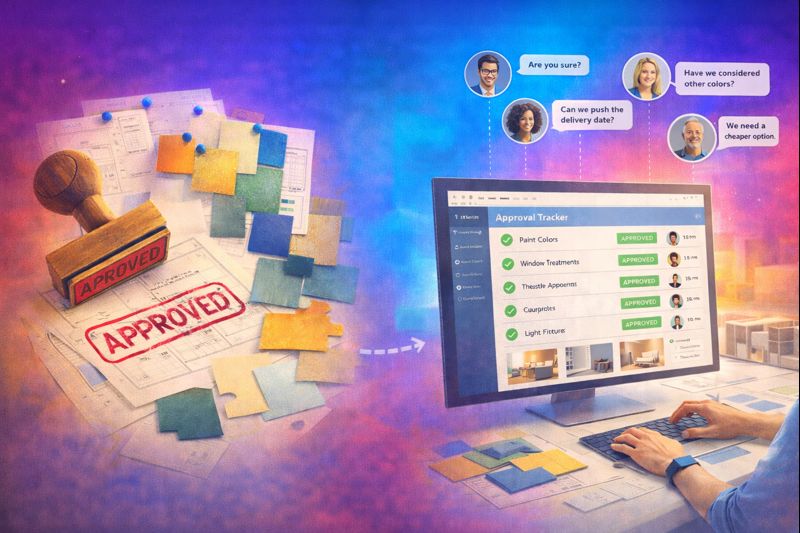
Introduction: The Work Isn’t the Problem — the Handoffs Are
Interior projects rarely collapse because of poor ideas.
They collapse because information gets lost.
A client approves a direction.
Feedback comes in fragments.
Changes are discussed verbally.
Decisions live in emails, WhatsApp, comments, PDFs, and meeting notes.
Weeks later, no one is fully sure:
- what was approved
- what changed
- who decided what
- which version is current
Design quality suffers not because teams lack talent — but because project memory is weak.
This is where Interior CRM stops being “admin software” and becomes a design protection system.
Short Briefing: Who This Pillar Is For
This article is written for:
- interior design studios
- architecture firms with interiors teams
- fit-out contractors with design responsibility
- design managers overseeing multiple projects
- agencies scaling beyond founder-led workflows
If your interiors lose clarity as projects scale, this pillar is for you.
The Core Problem: Interior Design Is Communication-Heavy, Not Drawing-Heavy
Interior work generates more communication than almost any other AEC discipline.
Every project involves:
- frequent client feedback
- material approvals
- budget adjustments
- scope clarifications
- consultant coordination
- vendor discussions
Most studios manage this through tools not built for design workflows.
The result?
- scattered approvals
- unclear accountability
- version confusion
- late surprises
Design doesn’t fail — coordination does.
Why Generic CRMs Don’t Work for Interior Teams
Traditional CRMs are built for sales pipelines, not design delivery.
They track:
- leads
- deals
- contacts
They don’t track:
- design intent
- approval states
- scope evolution
- revision history
- decision dependencies
Interior teams don’t need better sales tracking.
They need decision tracking.
The Hidden Cost of Poor Project Memory
When decisions aren’t clearly recorded:
- designers redo work
- clients reopen approvals
- consultants misinterpret intent
- teams argue over history
This creates:
- unbillable hours
- client frustration
- internal stress
- eroded margins
Most studios accept this as “part of the job.”
It isn’t.
Interior CRM Is About Controlling Intent, Not Micromanaging Teams
A good Interior CRM doesn’t add bureaucracy.
It removes ambiguity.
It creates:
- a single source of truth
- visible approval states
- traceable decisions
- shared context across teams
Designers spend less time explaining and more time designing.
Why Interior Teams Feel the Pain More as They Scale
Small studios survive on memory and proximity.
As teams grow:
- projects overlap
- responsibilities split
- communication fragments
What worked at 3 projects breaks at 15.
Interior CRM becomes essential not because teams get worse — but because complexity increases.
The Difference Between “Approved” and “Understood”
Many interior problems begin with this confusion.
A client says “approved.”
The team hears “final.”
But approval without context is fragile.
Interior CRM captures:
- what was approved
- why it was approved
- under what assumptions
This protects teams when changes arise later.
Where Interior CRM Fits in the AEC Ecosystem
Interior CRM sits between:
- concept tools (mood boards, layouts)
- delivery systems (BIM, coordination, site)
It ensures intent survives the transition.
And when projects move deeper into coordination, validation, and execution, platforms like Ruwaq Design extend this control into full AEC workflows — so interiors don’t get diluted when reality hits.
How Interior CRM Creates Clarity Without Slowing Design Teams
Interior Projects Move Fast — Information Often Doesn’t
Interior design work is dynamic by nature. Decisions evolve daily. Feedback arrives mid-process. Changes are discussed casually in meetings, calls, or site visits.
The problem is not speed.
The problem is traceability.
When information moves faster than it’s captured, teams lose context. Weeks later, no one remembers the reasoning behind a decision—only the result. This is where confusion, rework, and conflict begin.
Interior CRM doesn’t slow teams down. It keeps pace with decision-making.
Capturing Decisions at the Moment They’re Made
The most valuable function of Interior CRM is not task tracking—it’s decision capture.
A strong system records:
- what was decided
- who approved it
- when it was approved
- what assumptions were attached
This doesn’t require long documentation. It requires structured recording at the right moment.
When decisions are captured in context, they stop being vulnerable to reinterpretation later.
Why Approval Tracking Matters More Than Task Tracking
Interior teams often know what needs to be done. What they don’t always know is what is truly approved.
Approval tracking clarifies:
- which designs are locked
- which elements are provisional
- which changes are client-driven
- which revisions are internal
Without this clarity, teams operate in constant uncertainty.
Interior CRM replaces guesswork with visibility.
Managing Scope Changes Without Emotional Conflict
Scope creep is rarely intentional. It usually emerges from small changes that feel reasonable at the time.
Interior CRM helps teams:
- link changes to original approvals
- show how scope evolved
- clarify cost and timeline impact
- reset expectations early
When scope evolution is visible, conversations become factual instead of emotional.
This protects relationships as much as margins.
Version Control Without Policing Designers
Designers dislike rigid systems that feel like surveillance. Good Interior CRM avoids this by focusing on outcomes, not behavior.
It tracks:
- current versions
- superseded versions
- reasons for change
Designers remain free to iterate. The system simply ensures everyone knows which version matters.
This reduces internal friction and external confusion.
Why Interior CRM Reduces Redesign More Than Any Tool
Most redesign happens because teams revisit decisions they thought were settled.
Interior CRM prevents this by:
- making approvals visible
- preserving context
- reducing “I thought we agreed” moments
When everyone shares the same project memory, progress becomes cumulative instead of circular.
Collaboration Improves When Accountability Is Clear
Accountability doesn’t mean blame. It means clarity.
When decisions are traceable:
- designers feel protected
- project managers feel informed
- clients feel heard
Interior CRM creates shared ownership instead of silent assumptions.
Where Interior CRM Connects to the AEC Workflow
Interior CRM is not the final system. It’s the bridge.
Once interior intent is stable:
- BIM coordination begins
- consultants align systems
- site teams execute
At this stage, platforms like Ruwaq Design extend interior CRM logic into full AEC delivery—connecting approvals, changes, and coordination so interior intent survives contact with reality.
Why Teams Feel Less Stressed With Better Project Memory
Stress often comes from uncertainty.
When teams don’t know:
- what’s approved
- what’s current
- what might change
they overwork, double-check, and hesitate.
Interior CRM reduces this cognitive load. Designers stop worrying about history and focus on quality.
How Interior CRM Reduces Disputes, Protects Margins, and Enables Scale
Why Disputes Rarely Start With Bad Intent
Most interior design disputes don’t begin with disagreement. They begin with ambiguity.
A client remembers approving something—but not the conditions attached to it.
A designer remembers the conditions—but can’t easily prove them.
A contractor builds to the latest drawing—while the client recalls an earlier conversation.
By the time the issue surfaces, everyone feels justified—and frustrated.
Interior CRM reduces disputes by preserving context, not by policing behavior.
The Real Cost of “He Said, She Said”
Disputes drain more than money.
They consume:
- leadership time
- team morale
- client trust
- future referrals
Even when teams “win” an argument, they often lose momentum and goodwill.
Interior CRM replaces verbal memory with shared records—so disagreements become clarifications, not confrontations.
How Clear Approvals Protect Margins
Margins erode quietly through untracked changes.
A small tweak here.
An extra option there.
A “quick revision” that becomes a pattern.
When approvals and scope changes aren’t logged clearly, teams absorb work they shouldn’t.
Interior CRM protects margins by:
- tying work to approvals
- showing scope evolution
- making change impact visible early
This doesn’t create friction. It creates fairness.
Why Clients Trust Teams With Transparent Processes
Clients don’t expect perfection.
They expect clarity.
When teams can show:
- what was approved
- when it changed
- why it changed
clients feel informed rather than surprised.
Interior CRM turns conversations from defensive explanations into confident walkthroughs.
Trust grows when nothing feels hidden.
Scaling Interior Teams Without Chaos
Studios often hit a growth ceiling—not because demand slows, but because process breaks.
As projects increase:
- founders become bottlenecks
- decisions scatter
- junior teams hesitate
- rework increases
Interior CRM allows studios to scale by:
- standardizing decision capture
- clarifying ownership
- preserving project memory
- reducing reliance on individual recall
The studio becomes resilient—not fragile.
Designers Gain Freedom, Not Restrictions
There’s a fear that systems will limit creativity.
In practice, the opposite happens.
When designers know:
- approvals are tracked
- changes are visible
- context is preserved
they take creative risks with confidence—because they’re protected from misinterpretation later.
Interior CRM removes the anxiety of “Will this come back to me?”
Where Interior CRM Transitions Into AEC Delivery
Interior CRM stabilizes intent before technical execution begins.
Once projects move into:
- BIM coordination
- consultant alignment
- procurement
- site delivery
that stabilized intent must survive a more complex ecosystem.
This is where platforms like Ruwaq Design extend Interior CRM principles into full AEC workflows—connecting approvals, changes, coordination, and delivery so interior intent isn’t diluted under pressure.
Interior CRM sets the foundation.
Ruwaq carries it through execution.
Why interiorcrm.com Becomes an Authority Domain
The role of interiorcrm.com is not to sell features.
It’s to explain why interior projects break—and how to prevent it.
By focusing on:
- decision clarity
- approval integrity
- scope control
- scaling realities
the domain earns trust from studios, agencies, and AEC teams.
That trust naturally flows to deeper execution platforms when projects demand it—without aggressive sales language.
Authority comes from solving pain before it becomes expensive.
The Bigger Shift: Design Management Becomes a Competitive Advantage
In the past, great design was enough.
Today, great design plus great management wins.
Clients choose teams that:
- communicate clearly
- manage change professionally
- protect budgets and timelines
- scale reliably
Interior CRM turns management from a weakness into a differentiator.
Final Conclusion
Interior projects don’t fail because designers lack talent.
They fail because decisions disappear.
Interior CRM fixes that by preserving context, protecting approvals, and enabling teams to scale without chaos.
The most successful studios don’t just design beautifully.
They remember clearly, communicate confidently, and deliver consistently.
That’s what Interior CRM enables.